The Scope
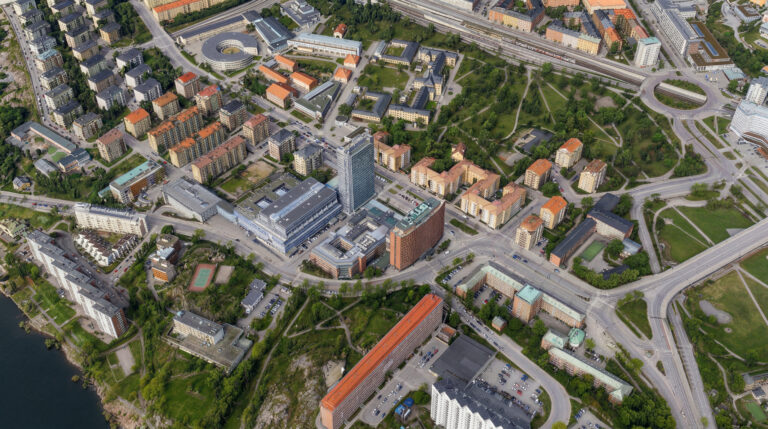
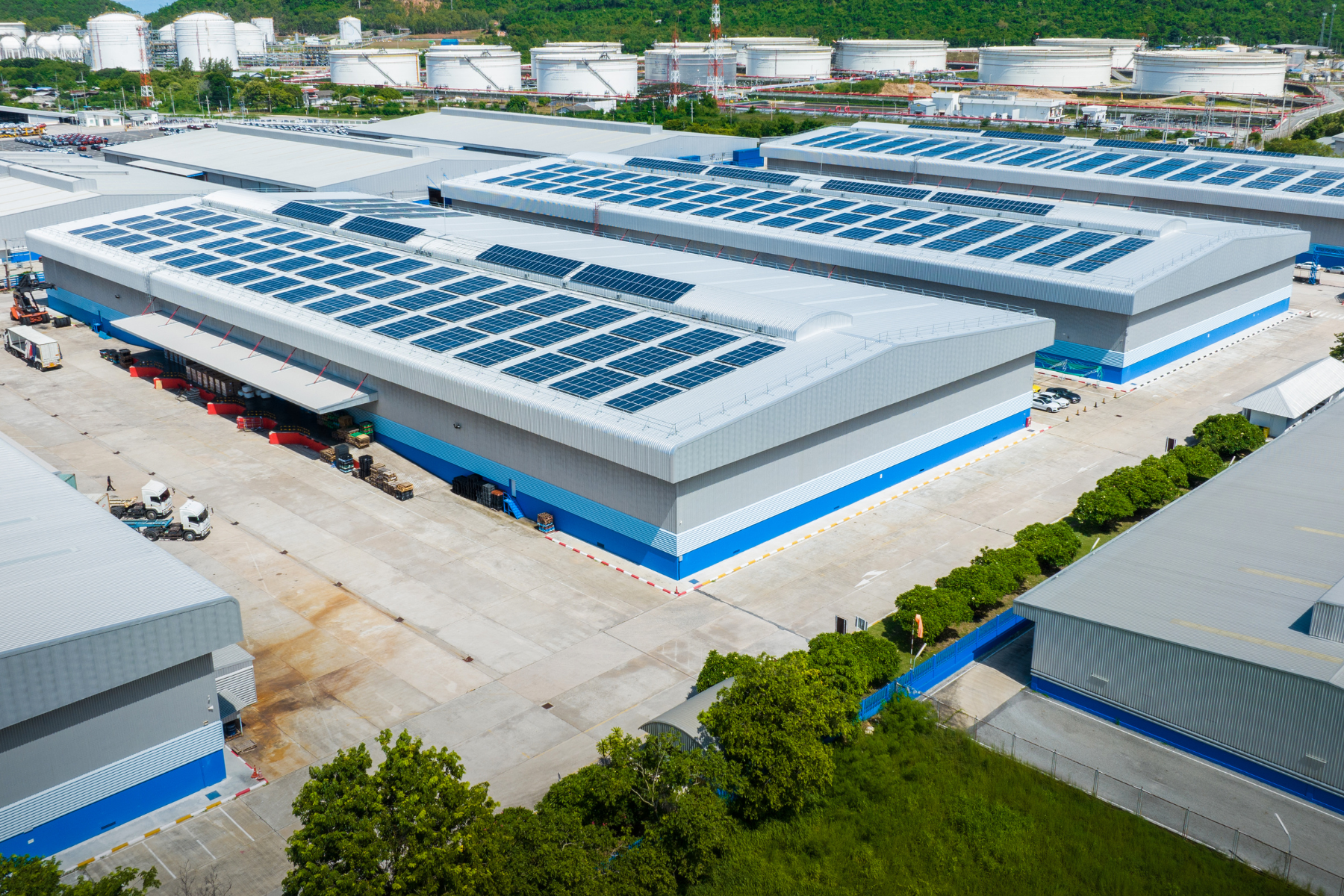
UC2 will focus on the working environment, more precisely, on industrial zones outside of urban areas. In this, the automotive industry is taken as an example. Learnings from this example will be aggregated and combined with other supply chains from other industries to develop an overarching system, combining different industrial organisations located in a similar industrial zone to derive how the delivery of required goods from urban areas can be done in a collaborative manner. Considering this high-level goal, UC2 focuses on improving the internal logistics and goods handling in an automotive factory (Otokar). Otokar’s manufacturing strategy is rather different from big OEMs like Mercedes or BMW as they produce 1000+ different models every year based on a customer driven tailor-made fashion. This brings an advantage in the market. However, this also brings the increased complexity in the production environment where more than 1000 different types of automotive parts should be tracked, services and workflows should be managed, and the overall operation should be coordinated seriously.
The Objectives
Aligned with these challenges, UC2 aims to reach the following objectives: i) To improve the traceability of materials, semifinished interim products and other goods that are required to carried from one unit to another during the manufacturing workflow; ii) To improve the inventory management by integrating the tracking the records of services with the crucial information like the responsibilities of workers, workload sharing, authorization and authentication of persons and nodes, financial flows, demand&response dynamics, etc.; iii) To enhance trustworthy (secure, safe, privacy-aware and accountable) interaction and communication between the workers, devices and systems; iv) To strengthen the sustainability of inventory management and intra-logistics services by considering the optimization of energy usage.
Description: The process begins with the rigorous tracking of automotive components across multiple units in the targeted manufacturing environment aiming for a 99.5% accuracy in their traceability. Concurrently, emphasis will be given to the digital validation of both the condition and authenticity of these components, striving for a 98% real-time detection rate of inconsistencies. To advance this, the system will leverage decentralized solutions, enhancing supply chain and inventory management with 95+% transparency and resilience, and integrating IoT mechanisms that aim for a 95% efficiency rate in providing real-time feedback. Furthermore, UC2 will initiate collaborative monitoring, engaging with all UC2 stakeholders (e.g., up to 5% year-on-year improvement in monitoring precision). Overall, the target for UC2 is to design a harmonized integration of organizational operations, ultimately forging a trustworthy, transparent and efficient automotive parts supply chain. Automation of intra-logistics processes will be emphasized in UC2. Once the supplied goods are delivered to the destination production environment (e.g., OTOKAR factory), the internal (inside the factory in Sakarya/TR promises) transportation will be realised with autonomous forklifts, autonomous mobile robots and autonomous carriers (provided by OTOKAR), e.g., from department A to B. Autonomous Ground Vehicles (AGV) will be connected to an internal Wi-Fi (or UWB) system via beacons and instant data (GPS, info about the carriage, etc.) that will be transmitted through secure IoT gateways. Next to WIFI, a UWB-IR is addressed for secure ranging, in the factory to provide information about the positioning of vehicles and goods as well as personnel to increase operational safety. UC2 will focus on lab-scale test cases and countermeasures dealing with low-level HW-enabled cyber-physical resilience of the communication backend used in limited environments (e.g., OTOKAR test area). UC2 will deal with the service-level attacks and their testing. The main functions of the UC2 are as follows; I) Vehicle tracking: Route optimization and planning algorithms will be created to keep track and manage in-campus vehicles (e.g., forklifts, carrier wagons etc.). It is supposed to have up to 100 forklifts working in a 500K m2 factory area within UC2 (20% of them are planned to be autonomous). The average drive distance for a typical forklift is estimated as 10 km/day depending on the daily demand. This application could be customized depending on the use; optimized AI solutions, low-power needs and security concerns could be addressed separately as described below as demonstrators. This approach will also ensure flexibility in addressing different needs. II) Inventory Tracking and Good Handling: 2000+ automotive parts, materials or semi-finished products and related inventory and operational data will be tracked among at least 10 different departments. Especially, cross-department delivery renders a difficult case for industries like automotive. To ensure a secure and fault-free flow of materials, it is essential to create flawless tracking from the supply point to the point of use and/or storage. Again, with all the necessary plug-and-play demonstrators, this application would be a part of supply chain management and logistics. III) Sustainable, trustworthy and safe operations considering the energy efficiency in logistic network and human-friendly and safe autonomous ground operations addressing the complex and changing nature of the manufacturing environment. The charging efficiency and charging process planning will help improve sustainability.
The Country & Area
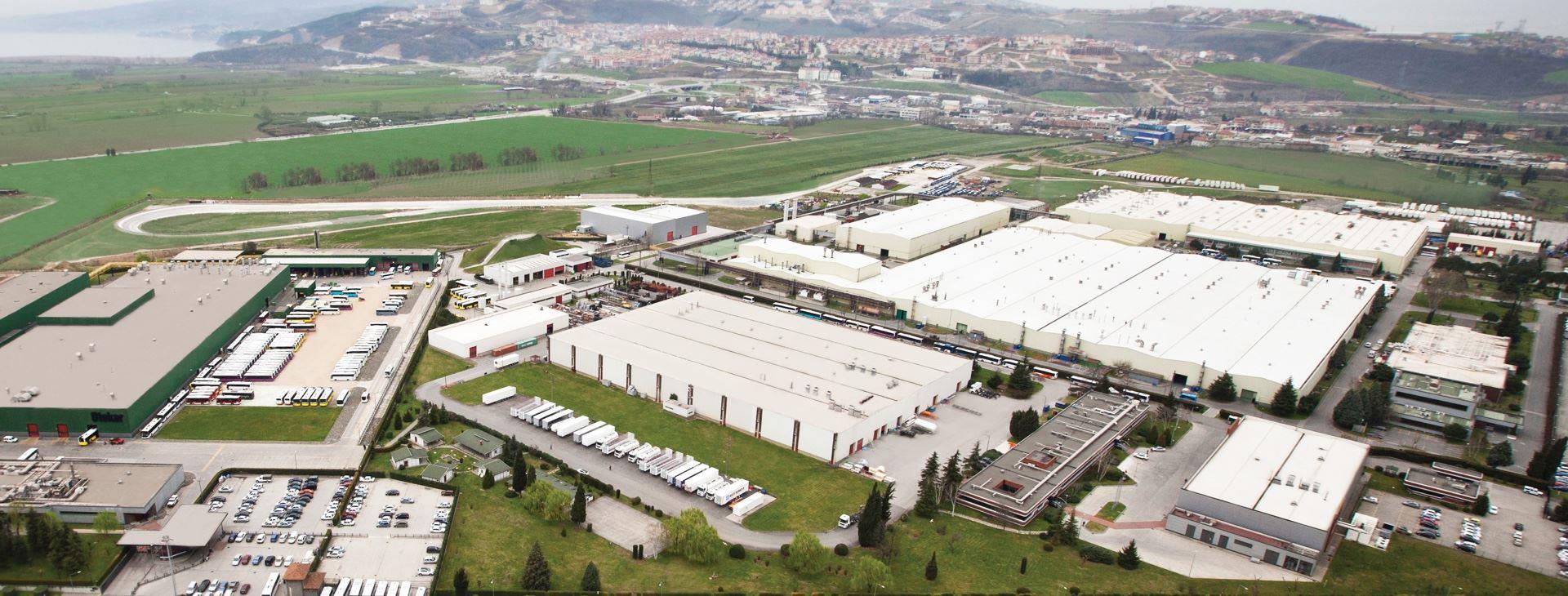
OTOKAR Factory at Sakarya Turkiye. 500K m2 factory area 45% indoor, ~4000 employees working in 24 different departments.
The Demonstrations
- Demonstration 2.1: LLM-based human-friendly inventory management and goods handling with internal logistics
- Demonstration 2.2: Utilisation of RISC-V-enabled cyber-physical resilience for Trustworthy and Safe Vehicle-to-X interaction
- Demonstrator 2.3: Trustworthy item tracking with UWB-IR in automotive and industrial environments with secure ranging and radar
- Demonstration 2.4: Low power and trustworthy embedded AI inference accelerator based on RISC-V architecture for more energy-efficient vehicular networks
Demonstration #2.1: LLM-based human-friendly inventory management and goods handling with internal logistics: In the context of automotive manufacturing, efficient inventory management and goods handling are paramount for streamlining production processes and ensuring timely delivery of vehicles to customers. LLM technology (KI2.6), this use case demonstrates how advanced AI-powered systems (as offered in KI2.5) will enable inventory management and internal logistics while prioritizing humanfriendly interactions. OTOKAR’s automotive manufacturing plant will adopt an LLM-based inventory management and goods handling system, tailored to meet the unique needs of their production environment. Employees interact with the system using natural language commands, allowing for intuitive communication and seamless integration into existing workflows. Every item within the inventory will be equipped with RFID tags, allowing for real-time tracking and traceability throughout the production process. Additionally, Autonomous forklifts equipped with LLM capabilities will be deployed for goods handling tasks, including picking, packing, 32 and transporting inventory within the facility. To bring all the collected data together an LLM-suited semantic database will be developed to aggregate the data for collaborative logistics planning. This will be implemented by considering the vehicular network and AI inference.
Demonstration #2.2: Utilisation of RISC-V-enabled cyber-physical resilience for Trustworthy and Safe Vehicle-to-X interaction Will be implemented by integrating DCSP-based secure edge-IoT gateways (KI1.1), RF-based traceability, end-to-end holistic security tools, cyber-incident monitoring, node&person authentication (integrated with the iSim technology offered in KI1.2) and proactive and trusted monitorisation of things and vehicles at internal logistics. The DCSP-integrated IoT gateways will be installed on the AGVs and equipped with GPS (communicating with the mesh network available indoors), proximity sensors and cameras to detect obstacles and persons during the cruise. This will prevent accidents and improve the workers’ safety during operations.
Demonstrator #2.3: Trustworthy item tracking with UWB-IR in automotive and industrial environments with secure ranging and radar Within logistics, which is the focus of this demonstrator, UWB is a known technology for item tracking using beacons and anchors (KI3.1 Multi-Interface Gateway with Embedded Intelligence) with real-time localization and monitoring which can be further extended with radar to detect human presence in certain safety or security areas (automatically unlock/lock systems by user physical presence with a mobile device as second-factor authentication) (KI2.1 RISC-V based low power embedded AI-enhanced solution with scalable vector processing and secure distributed learning support for UWB secure ranging and radar applications. The highly complex RF environment in the industrial sector causes a high number of interference and reflections or non-line-of-sight conditions. This increases the need for applicationspecific solutions to boost processing power on analogue/mixed-signal RF radio ICs. Such a solution should serve automotive and industrial/logistics environments including the mobile devices of users supporting combined secure ranging and radar/sensing applications (KI2.1).
Demonstration #2.4: Low power and trustworthy embedded AI inference accelerator based on RISC-V architecture for more energy-efficient vehicular networks IMA in cooperation with academic partners will develop a power-embedded AI inference accelerator demonstrator based on RISC-V architecture. The demonstrator based on a central RISC-V computational unit will be focusing on an efficient lowpower AI-based inference sensor processing algorithm running at the edge of the inter-vehicular network structure close to the sensor itself (KI3.1 Multi-Interface Gateway with Embedded Intelligence). The security aspects will be covered by addressing the secure and low-power DNN accelerator architectures offered in the project (KI2.4). The deep edge algorithm execution will provide a higher level of end-node autonomy and lower overall power consumption with only condensed relevant data being sent to the central ECU or the domain controller. In the case of a stationary vehicle the domain controller will receive a wake-up request only after a relevant input is identified thus further conserving energy, which will become significantly more relevant for autonomous and batterypowered vehicles, for Mobility-as-a-service solutions and other use-cases. An integral part of the planned demonstrator is a holistic development solution with a toolset for dataset creation, distributed training, generation of embedded ML inference code for RISC-V devices, and hardware abstraction layer (HAL) support for the HW architecture. To fulfil the big picture from the energy sustainability perspective, this demonstrator will also consider route optimisation (KI3.4), overall inventory management and charging monitoring and efficiency planning in close collaboration with Demonstration 2.1